
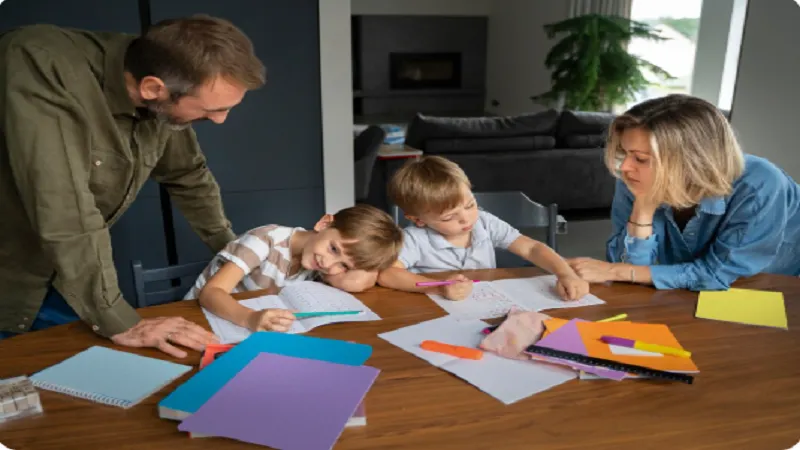
Parents and teachers are always looking for creative ways to help children grow and develop. Learning activities are an important part of childhood because they improve thinking skills, creativity, communication, and confidence. Children learn best when they are actively involved in fun experiences rather than simply memorizing information.
The concept of nldburma 10 famparentlife learning activities focuses on encouraging meaningful experiences that help children learn through play, exploration, and family interaction. These activities can easily be adapted for different age groups and require only simple materials that are commonly found at home or in the classroom.
This guide explains why learning activities matter, how families can create a positive learning environment, and ten enjoyable activities that support a child’s overall development.
Why Learning Activities Are Important
Learning activities do much more than keep children busy. They encourage children to discover new ideas while building important life skills.
Some of the major benefits include:
- Improving problem-solving abilities
- Developing creativity and imagination
- Building language and communication skills
- Strengthening memory and concentration
- Encouraging teamwork and cooperation
- Increasing self-confidence
- Supporting emotional development
- Making learning enjoyable
When children enjoy learning, they become more curious and motivated to explore the world around them.
Creating a Positive Learning Environment
A supportive learning environment does not require expensive equipment or a large space. The most important ingredients are encouragement, patience, and consistency.
Parents can create an effective learning atmosphere by:
- Setting aside regular learning time
- Limiting distractions
- Praising effort instead of perfection
- Allowing children to ask questions
- Providing opportunities for hands-on learning
- Making activities fun instead of stressful
A calm and welcoming environment helps children feel comfortable trying new things.
1. Reading Together
Reading is one of the simplest and most valuable learning activities.
Parents can read storybooks aloud while encouraging children to:
- Predict what happens next
- Identify characters
- Discuss the story
- Learn new vocabulary
- Describe their favorite parts
Reading strengthens language skills while encouraging imagination and critical thinking.
2. Nature Exploration
Outdoor learning introduces children to the natural world.
Simple activities include:
- Collecting leaves
- Observing insects
- Watching birds
- Planting flowers
- Growing vegetables
Nature teaches observation, patience, responsibility, and appreciation for the environment.
Children also develop curiosity by asking questions about the plants and animals they discover.
3. Arts and Crafts
Creative projects help children express themselves while improving fine motor skills.
Popular craft ideas include:
- Paper cutting
- Coloring
- Painting
- Clay modeling
- Paper folding
- Decorating greeting cards
There is no right or wrong way to create art. The goal is to encourage creativity and self-expression.
4. Simple Science Experiments
Science becomes exciting when children can see concepts in action.
Easy experiments include:
- Mixing colors
- Growing beans in a cup
- Making a baking soda volcano
- Floating and sinking objects
- Observing ice melting
These activities teach observation, prediction, and logical thinking while making science enjoyable.
The ideas found in nldburma 10 famparentlife learning activities encourage children to ask questions and discover answers through exploration instead of memorization.
5. Educational Games
Games provide opportunities to learn while having fun.
Examples include:
- Matching games
- Memory cards
- Alphabet games
- Number puzzles
- Word searches
- Building blocks
Games improve concentration, strategic thinking, and cooperation.
Children often remember lessons better when learning happens through play.
6. Cooking Together
Cooking teaches practical life skills while introducing basic math and science concepts.
Children can help by:
- Measuring ingredients
- Counting items
- Mixing ingredients
- Reading simple recipes
- Identifying different foods
Cooking also encourages healthy eating habits and responsibility.
Parents should always supervise children during kitchen activities for safety.
7. Music and Movement
Music supports emotional expression while improving memory and coordination.
Fun ideas include:
- Singing songs
- Dancing
- Playing simple instruments
- Clapping to rhythms
- Learning action songs
Music activities also improve listening skills and language development.
Children naturally enjoy movement, making this an excellent learning experience.
8. Puzzle Challenges
Puzzles encourage children to think carefully before finding solutions.
Suitable puzzles include:
- Jigsaw puzzles
- Shape puzzles
- Number puzzles
- Logic puzzles
- Maze activities
These exercises improve patience, concentration, and reasoning abilities.
Completing puzzles also gives children a sense of achievement.
9. Storytelling and Role Play
Children enjoy pretending and creating imaginary situations.
Parents can encourage role play by acting as:
- Doctors
- Teachers
- Shopkeepers
- Farmers
- Scientists
- Firefighters
Storytelling develops creativity while improving speaking and listening skills.
Children also learn empathy by imagining different situations and perspectives.
Many families include storytelling as part of nldburma 10 famparentlife learning activities because it encourages both communication and imagination.
10. Daily Life Learning
Everyday routines provide valuable learning opportunities.
Children can learn while:
- Organizing toys
- Folding clothes
- Watering plants
- Setting the table
- Sorting objects by color
- Counting household items
These simple responsibilities help children become more independent while practicing practical skills.
Daily experiences often become the most memorable learning moments.
Tips for Parents
Parents play a major role in shaping a child’s attitude toward learning.
Helpful suggestions include:
- Encourage curiosity.
- Answer questions patiently.
- Celebrate small achievements.
- Avoid comparing children with others.
- Make learning enjoyable.
- Allow children to make mistakes.
- Spend quality time together.
- Adapt activities to the child’s interests.
Positive encouragement helps children develop confidence and a lifelong love of learning.
Common Challenges
Some children may lose interest quickly or become frustrated during activities.
Parents can overcome these challenges by:
- Keeping sessions short
- Offering variety
- Taking breaks when needed
- Using age-appropriate activities
- Giving positive feedback
- Focusing on progress rather than perfection
Learning should remain enjoyable rather than becoming a source of pressure.
Long-Term Benefits
Regular learning activities contribute to a child’s overall development.
Children gradually become:
- Better communicators
- Stronger problem solvers
- More creative thinkers
- Independent learners
- Confident individuals
- Responsible decision-makers
These skills continue to benefit children throughout school and later in adult life.
The balanced approach promoted through nldburma 10 famparentlife learning activities encourages steady growth across academic, social, emotional, and practical areas of development.
Conclusion
Learning does not have to be complicated or expensive. Simple activities carried out consistently can make a lasting difference in a child’s development. Reading, exploring nature, creating art, solving puzzles, cooking, storytelling, and everyday household tasks all provide valuable opportunities to learn.
Parents and caregivers who create positive learning experiences help children build confidence, curiosity, and important life skills. By making learning enjoyable and encouraging active participation, families can support healthy development while creating meaningful memories that last for years.
Learn More: https://theweeklyhealthiness.co/